
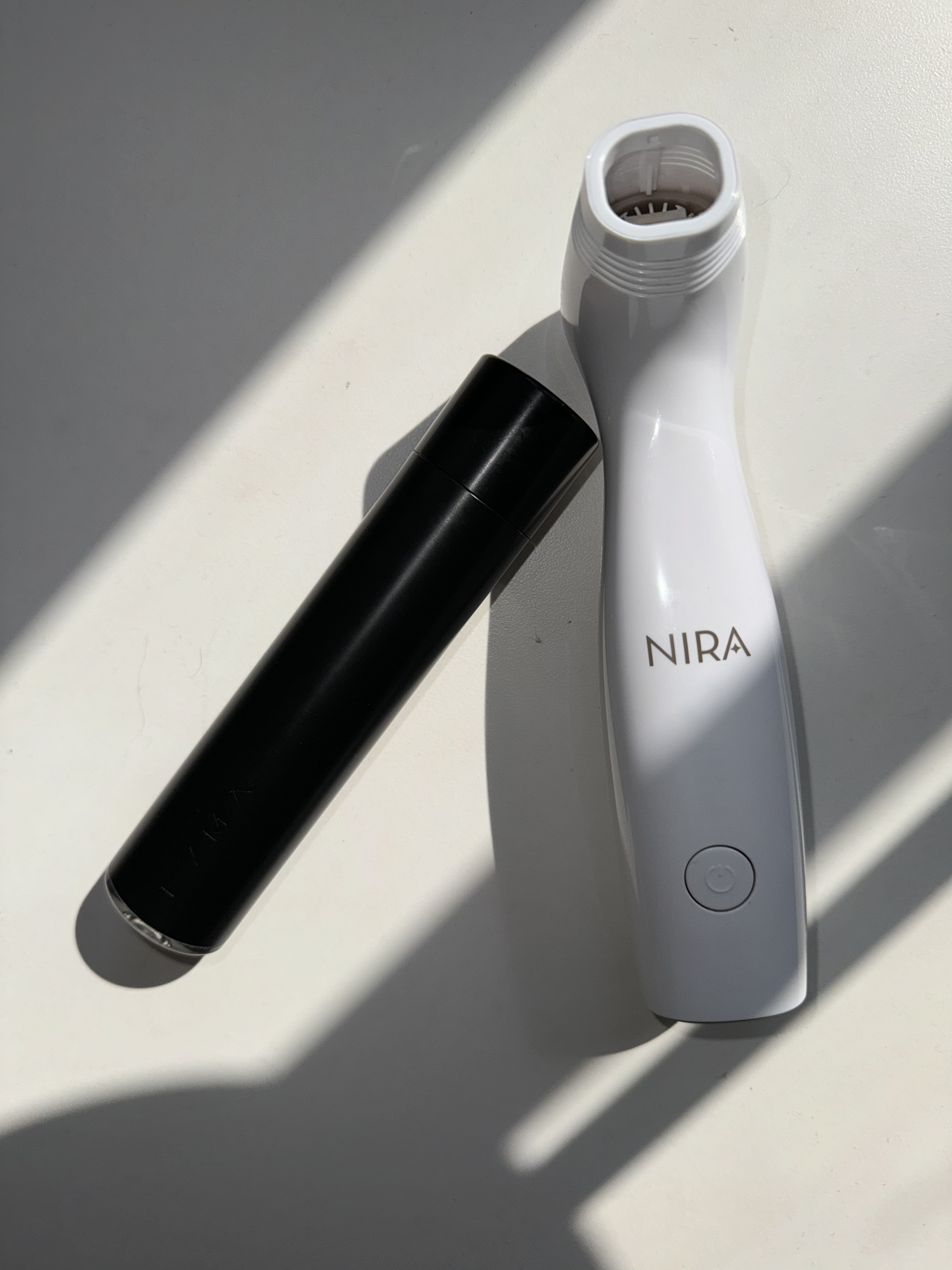
When it comes to at-home skincare devices, there’s no shortage of options promising you youthful, glowing skin. But what if I told you not all devices are created equal, and some may offer more hype than results? Today, we’re taking a closer look at two popular at-home laser treatments: the NIRA Laser and the LYMA Laser. Both have generated quite a buzz, but which one truly delivers on its promises? Let’s dive into the details.
NIRA vs. LYMA
Both NIRA and LYMA offer cutting-edge technology designed to rejuvenate the skin, reduce fine lines and wrinkles, and boost collagen production. However, their approaches are quite different.
NIRA uses a non-fractional laser technology that’s clinically proven to stimulate natural collagen production without causing damage to the skin’s surface. This is a key point of difference: NIRA’s laser technology targets the deeper layers of the skin, allowing it to promote collagen growth safely and effectively. It’s a non-invasive treatment that users can easily integrate into their daily skincare routine, providing visible results without pain or downtime.
LYMA, on the other hand, leverages a cold laser technology that is claimed to be safer for at-home use. While LYMA promotes itself as a device that can treat skin conditions like wrinkles and hyperpigmentation, the science behind its cold laser technology is less established in clinical settings compared to the non-fractional technology used by NIRA.

Ease of Use: Which Device Fits Seamlessly Into Your Routine?
We all want skincare devices that deliver results without making our daily routines more complicated. Let’s talk convenience.
NIRA is designed with the user in mind. Its ergonomic design and simple one-button operation make it easy and convenient to use. The device takes just 2 minutes a day for a full treatment, making it ideal for busy individuals who want effective results without spending hours in front of the mirror. Plus, the NIRA laser comes with 5 comfort levels that adjust the laser’s intensity based on your skin type, ensuring a safe and customized experience every time.
LYMA also boasts ease of use but requires 15 minutes per treatment area, which can add up if you’re targeting multiple areas. While some users appreciate the longer sessions as a self-care ritual, others find it more cumbersome compared to NIRA’s quick and targeted approach.
Clinical Results and Customer Reviews: What Are People Saying?
Both devices have their fan bases, but clinical results and customer reviews often tell the real story.
NIRA has undergone rigorous clinical testing, with results showing significant improvement in skin texture, reduction in fine lines, and overall skin firmness within 90 days of use. In fact, 93% of users reported visible results without irritation or downtime. The combination of non-fractional laser technology and real-world efficacy has earned NIRA high praise from dermatologists and skincare experts alike.
LYMA also shares positive reviews but lacks the same level of clinical backing. While some users report smoother and more radiant skin, the results appear to be less consistent and often require a longer period to see noticeable changes. Some reviews mention that the cold laser feels more like a light therapy device, which, while beneficial, may not offer the depth of treatment that the NIRA laser provides.
Price and Value: Which Device is Worth the Investment?
Let’s face it—price isn’t always a dealbreaker when it comes to investing in effective skincare. But value for money is crucial.
The NIRA Laser Bundle is competitively priced at around $899 and includes a 90-day risk-free trial with a 1-year warranty. Considering its clinical backing, quick treatment time, and proven results, NIRA offers a solid return on investment for those serious about anti-aging. Built for long-term use and convenience, the NIRA Laser is a true lifetime investment in youthful, radiant skin, complete with a compact charger to keep it ready for every treatment.
The LYMA Laser comes with a much steeper price tag, often retailing for around $2,695. While it does come with a lifetime guarantee and boasts a sleek, luxury design, the lack of comprehensive clinical studies and the higher price point may leave some potential buyers questioning its value compared to NIRA. The LYMA Laser, while effective, comes with a limited 10-year lifespan, making it a shorter-term solution compared to other more durable options on the market.
Breakdown:
| NIRA | LYMA | |
| Laser Technology | Non-Fractional Laser | Low Level Laser Therapy |
| FDA Cleared | Yes | Yes |
| Clinical Studies | Proven to Reduce Wrinkles | Medical Research Papers, No Studies |
| Pain & Redness Free | Yes | Yes |
| Effective for All Skin Tones | Yes | Yes |
| Treatment Time | Less than 10 minutes | 45-60 minutes |
| Portable | Yes | Yes |
| Cost | $899 for both NIRA lasers & 90 day supply of HA Serum + Peptide Cream (but you have to subscribe for the skincare) | $2,695 for LYMA Laser & 30 day supply of Oxygen Mist + Guide |

Conclusion: Which Device Comes Out on Top?
When it comes to choosing between the NIRA Laser and the LYMA Laser, it’s essential to look beyond the marketing and focus on the science, ease of use, customer satisfaction, and overall value.
While both devices have their merits, the NIRA Laser stands out as a more accessible, clinically proven, and user-friendly option that doesn’t break the bank. With its advanced non-fractional laser technology, quick treatment times, and backed-by-science results, NIRA offers a compelling choice for those looking to invest in their skin’s future.
If you’re in the market for an effective at-home laser treatment that has real results, the NIRA Laser seems to check all the boxes for both beginners and skincare enthusiasts alike.
Brought to you in collaboration with NIRA. We only partner with brands that reflect our values and standards, ensuring content that benefits you.
